M-Code: Strengthening GNSS for modern military operations
As GNSS threats evolve, M-Code is the military’s answer for signal security. But protecting the signal is only half the battle – true mission assurance requires a resilient timing architecture to keep PNT accurate and trusted in contested environments.
Paul Heim

Modern military operations depend on precision positioning, navigation and timing (PNT), making GNSS resilience a mission-critical concern. In response to the increasing vulnerability of traditional satellite signals to jamming, spoofing and interference, the United States Department of Defense (DoD) introduced M-Code, an encrypted GPS signal that provides a secure, high-integrity PNT source for military operations.
While M-Code significantly improves signal integrity, it’s only one part of a broader approach to assured mission timing.
What is M-Code?
M-Code (short for Military Code) is a next-generation encrypted GPS signal developed for authorized military users. It replaces legacy encrypted signals, such as Selective Availability Anti-Spoofing Module (SAASM), which was designed for an earlier threat landscape.
Key features
- Stronger encryption and authentication
- Improved resistance to spoofing
- Higher signal power and flexibility
- Compatibility with modern anti-jam antennas and receivers
M-Code makes GNSS more difficult to manipulate and easier to trust – both essential elements in protecting critical mission operations.
Why does M-Code matter?
The mission landscape has changed dramatically since encrypted GPS was first introduced with the launch of the first GPS Block I satellites in 1978. Today’s military systems operate in environments where GNSS disruption is expected. Air, land and sea operators must contend with harsh environments where cyberattacks and GNSS jamming and spoofing are prevalent.
In these conditions, compromised GNSS can degrade communications, sensor fusion, electronic warfare (EW) coordination and command-and-control systems. M-Code directly addresses the security of the GNSS signal itself, making it far more difficult for adversaries to inject false positioning or timing data.
That alone makes M-Code an essential component of modern military platforms – but that’s not all.
Growing GNSS vulnerabilities demand a more robust approach to protection. Here we examine how a multi-layered PNT strategy enhances system resilience in today’s contested environments.
Resilient timing architecture
Military PNT architectures are designed around resilience and continuity. M-Code improves trust in GNSS and resilient timing ensures accuracy.
Modern military systems place demanding requirements on their timing solutions. They must:
- Maintain precise time during GNSS outages
- Support multiple sources
- Distribute trusted time securely
- Provide visibility into timing health and performance
This is where our OSA 5422 PTP grandmaster plays a vital role, enabling M-Code within resilient timing systems.
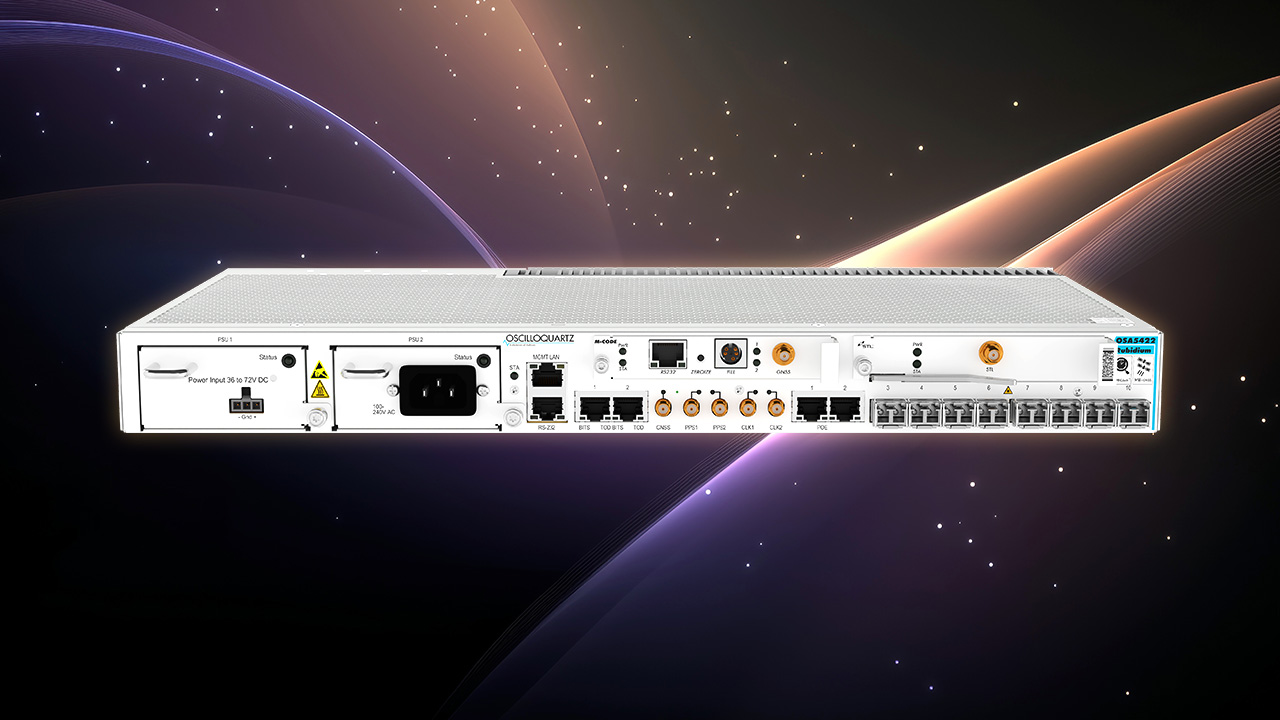
Key capabilities:
- High-performance holdover – Engineered to sustain precise timing during extended GNSS outages
- Multi-source architecture – Supporting GNSS, authenticated services and local references
- Secure time distribution – Delivering PTP, NTP, IRIG, 1PPS, STANAG and HaveQuick across mission systems
- Operational visibility – Providing insight into timing quality and system behavior to support situational awareness
- Mission assurance – Ensuring operational continuity in the most contested environments
M-Code represents a critical step forward in military GNSS security. Military systems, such as tactical communications networks, command systems and ground networks rely on PNT.
By combining M-Code with a resilient timing platform like our OSA 5422 PTP grandmaster, military operators can move beyond signal protection toward mission assurance, enabling trusted time even in contested environments.
Contact us today to learn more about our resilient timing architectures and mission-grade PNT solutions.
Originally published February 2, 2026. Updated February 10, 2026.