Resilient timing for modern defense platforms: Manned and unmanned
Manned and unmanned defense platforms depend on trusted timing to synchronize communications, sensors, navigation and mission systems in contested environments. Learn how layered timing architectures can maintain resilient PNT when GNSS is degraded, denied or manipulated.
Paul Zweers
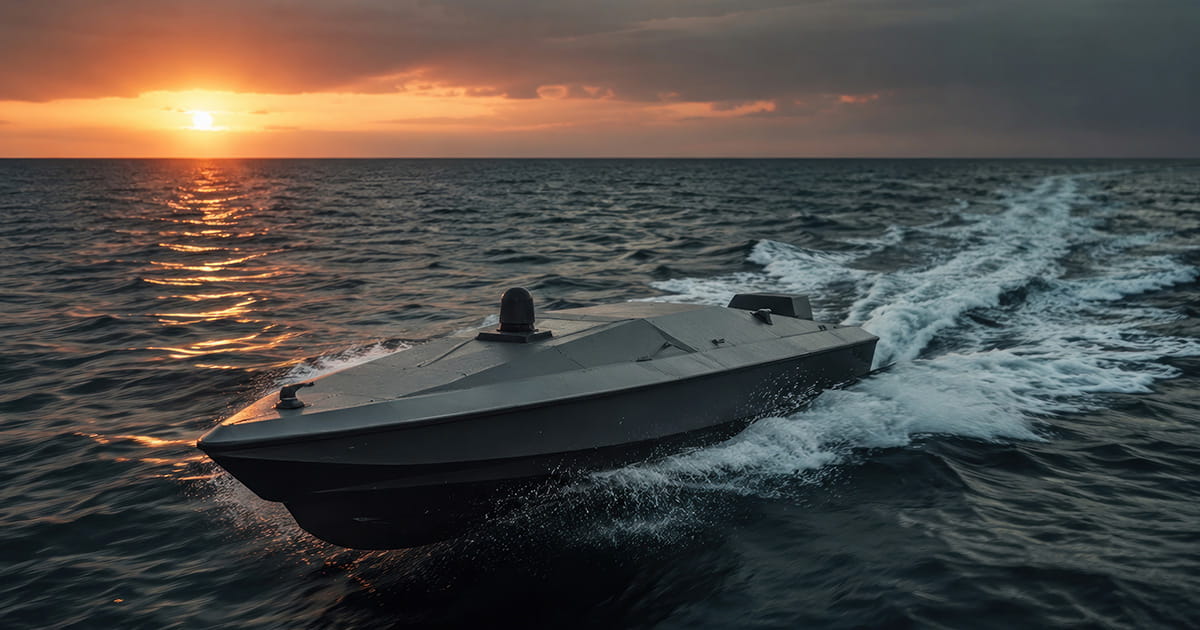
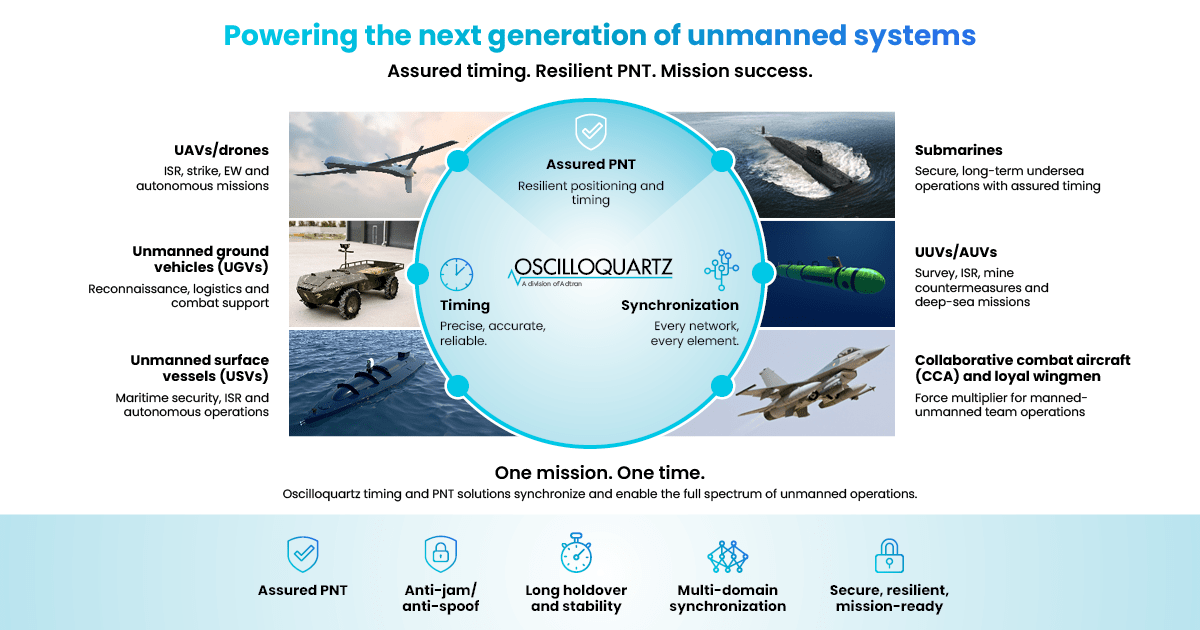
Unmanned systems are rapidly becoming central to modern warfare. Tactical UXVs now support intelligence, surveillance, reconnaissance, electronic warfare, precision targeting, border protection, maritime patrol and autonomous missions. Growing investment in tactical UXVs reflects a shift in defense programs from manned toward advanced unmanned systems in response to evolving operational requirements and global conflicts.
This shift also exposes a critical challenge: these platforms depend on trusted positioning, navigation and timing (PNT) in environments where GNSS can no longer be assumed. In contested air, land, littoral and undersea environments, jamming, spoofing, meaconing and cyber-enabled interference are now part of the operational threat landscape.
The threat is growing in scale and sophistication. GNSS interference capabilities that were once limited to advanced state actors are becoming more accessible, while jamming and spoofing techniques continue to evolve faster than many protection mechanisms. This reality is transforming assured PNT from a desirable capability into an operational requirement. Detection, classification and mitigation technologies must evolve continuously to keep pace with emerging threats. The ability to adapt quickly and deliver ongoing improvements is becoming as important as the underlying hardware.
Timing across air, land and sea platforms
For UAVs, this matters at every level. Small tactical drones need accurate time for radios, data links, payload coordination and command links. Medium and larger UAVs require timing for onboard mission computers, sensor fusion, ISR payloads, synthetic aperture radar, encrypted communications and multi-sensor alignment.

The larger and more autonomous the platform, the more important time becomes as the invisible reference that keeps onboard systems synchronized.
A UAV can lose GNSS position and continue a mission for some period using inertial navigation, vision, terrain matching or autonomy. These systems, however, still require a disciplined time base to fuse sensor inputs, compare trajectories, validate anomalies and coordinate with the wider force.
The same principle applies at sea and below the surface. UUVs, unmanned boats, autonomous underwater vehicles, submarines and hybrid manned/unmanned maritime platforms all operate in environments where GNSS is limited, unavailable or tactically undesirable. Underwater positioning depends on a combination of inertial navigation, Doppler Velocity Logs, acoustic positioning, acoustic modems and periodic GNSS updates when near the surface. Research on UUV positioning highlights the need to integrate and time-synchronize multiple positioning technologies to improve accuracy and reliability, especially in GNSS-denied environments.
Building a layered resilient timing architecture
Supporting these diverse platforms requires a layered timing architecture that can scale from strategic infrastructure to tactical platforms and embedded onboard systems, manned or unmanned.
Strategic timing and long-term holdover
At the strategic and platform level, Oscilloquartz coreSync+™ Series cesium atomic clocks provide the long-term stability needed for submarines, command centers, naval platforms, air-defense networks and mission infrastructure. Cesium-based timing provides operators with an independent, highly stable reference when GNSS is degraded, denied or intentionally disconnected.
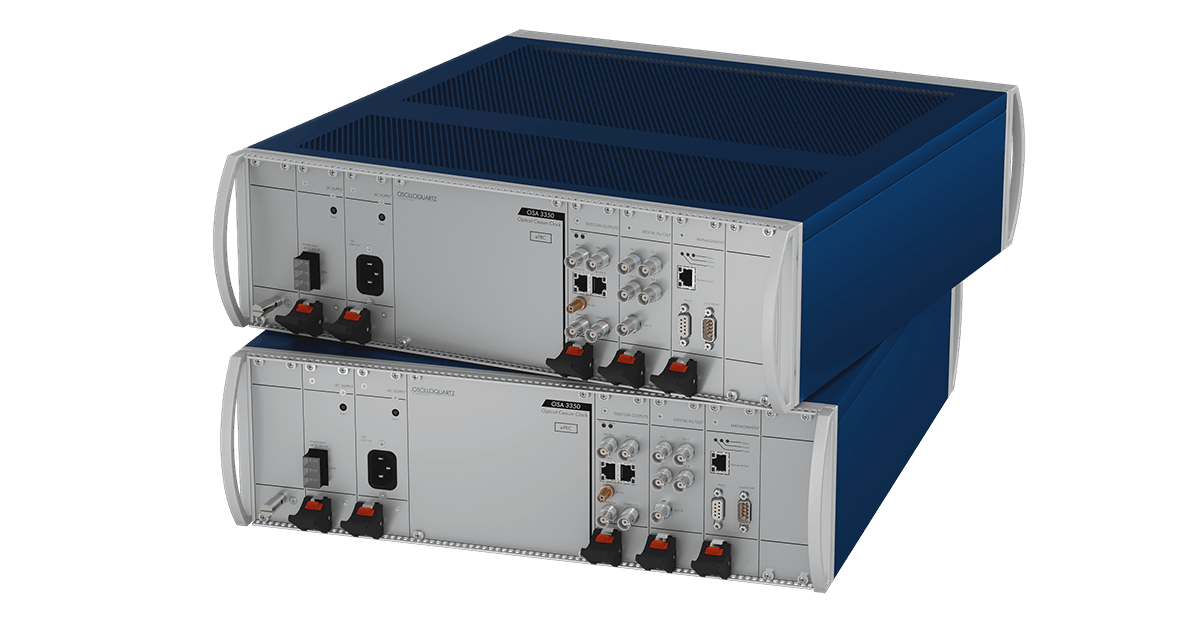
Figure 1: OSA 3350
In a submarine, for example, a high-performance cesium clock can support long-duration timing continuity while the vessel remains submerged. In a deployed command node, it can maintain trusted time for networks, radios, sensors and encrypted systems when satellite timing is contested.
Rugged timing at the tactical edge
At the rugged tactical edge, the ruggedSync™ Series OSA 5510 is directly aligned with the needs of mobile, unmanned and mission-critical defense synchronization. The OSA 5510 integrates multi-band, multi-constellation GNSS, advanced jamming and spoofing detection and mitigation capabilities, hardware readiness for M-Code and Iridium® PNT and advanced holdover capabilities for operation during GNSS outages.
As interference techniques continue to evolve, ongoing software and algorithmic innovation helps maintain operational resilience. These capabilities support applications including ground vehicles, mobile command posts, unmanned surface vessels, tactical shelters, deployable radar sites, air-defense systems and larger unmanned platforms where ruggedized assured timing is required.
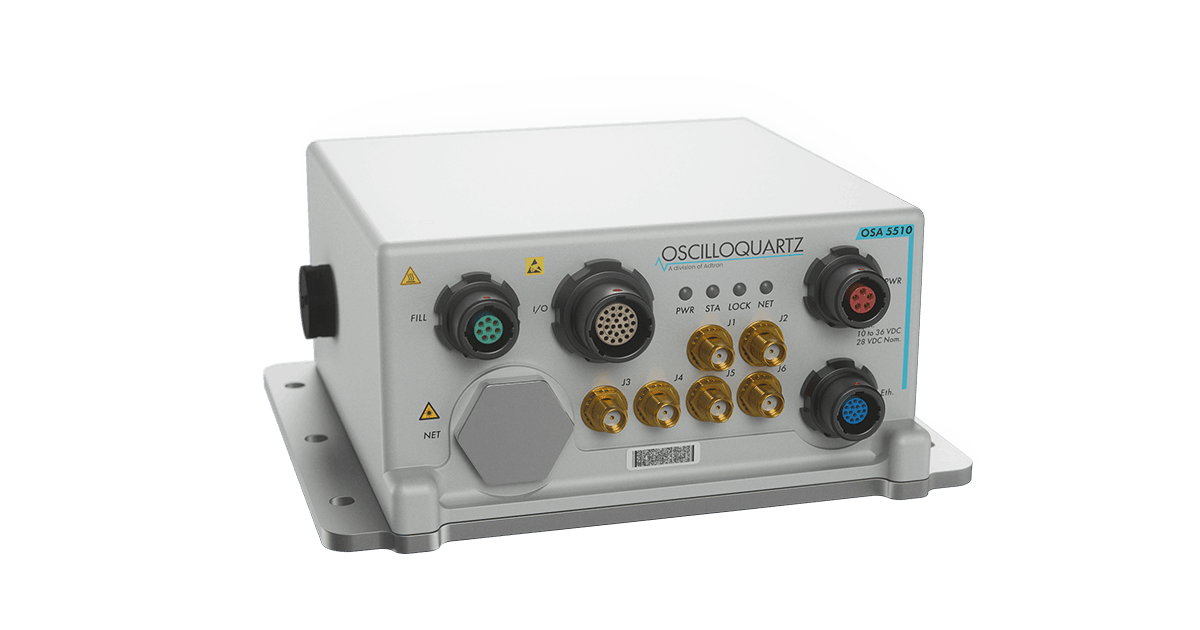
Figure 2: OSA 5510
For military networks and mission systems that still rely on legacy interfaces, the edgeSync+™ OSA 5422 demonstrates how Oscilloquartz bridges the gap between old and new timing domains. In defense and aerospace operations, secure communications, coordinated avionics, and multi-domain operations depend on trusted, synchronized time, while reliance on GNSS alone introduces operational risk.
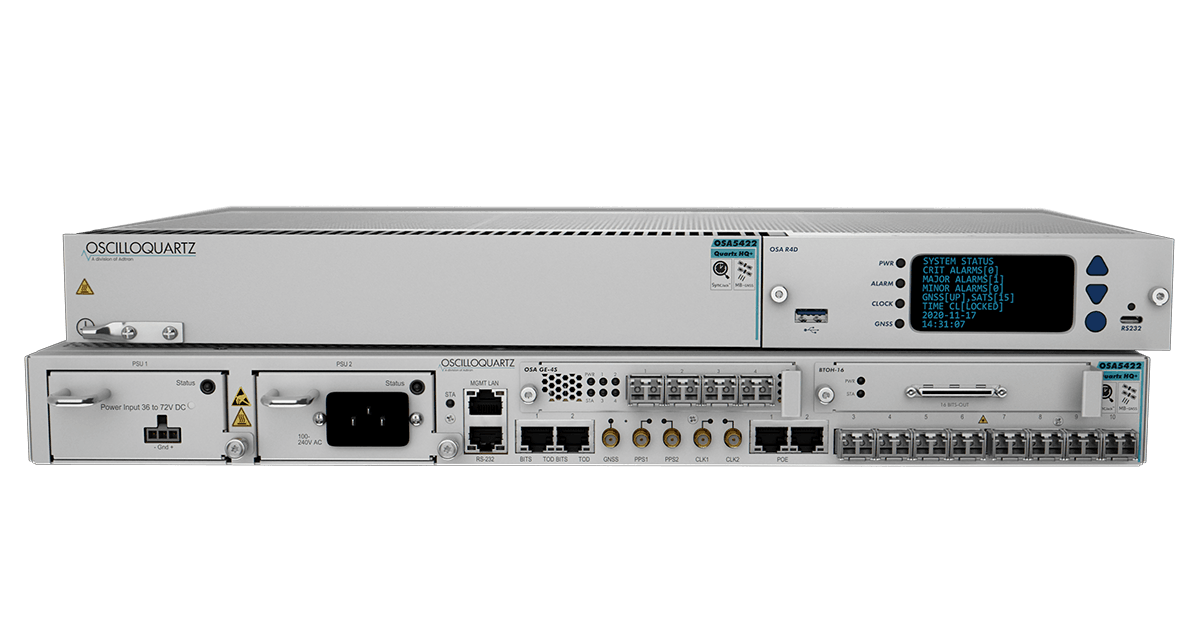
Figure 3: OSA 5422
The OSA 5422 consolidates GNSS receiver, time-of-day conversion, Have Quick generation and serial interface functions into a single platform, with support for STANAG 4246, Have Quick, NTP, PTP and White Rabbit.
This integration can reduce SWaP, remove external converters, simplify architectures and help keep legacy radios, mission computers and modern packet networks synchronized on the same trusted timing foundation.
The compact and robust accessSync™ Series OSA 5405, with multi-band receiver or LEO-based Iridium® PNT technology, delivers enhanced precision and resilience where GNSS reception is a challenge, making the OSA 5405 well suited for unmanned applications operating in denied environments.
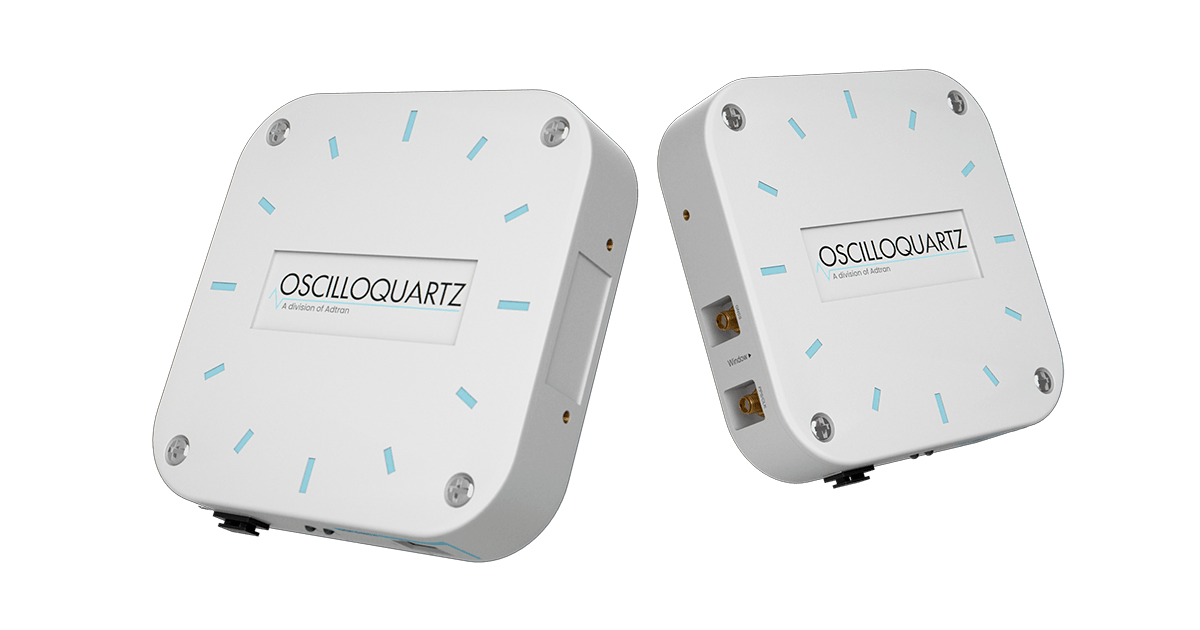
Figure 4: OSA 5405
Embedded timing for distributed platforms
At the embedded level, Oscilloquartz can go even further. The OSAinside™ Series, including the OSA 5400 SyncModule™ and OSA 5400 TimeCard™ embedded timing solutions, with STANAG 4246 and Have Quick, can deliver precise synchronization directly to third-party platforms such as open servers, switches or mission compute nodes via PCIe or M.2 interfaces.
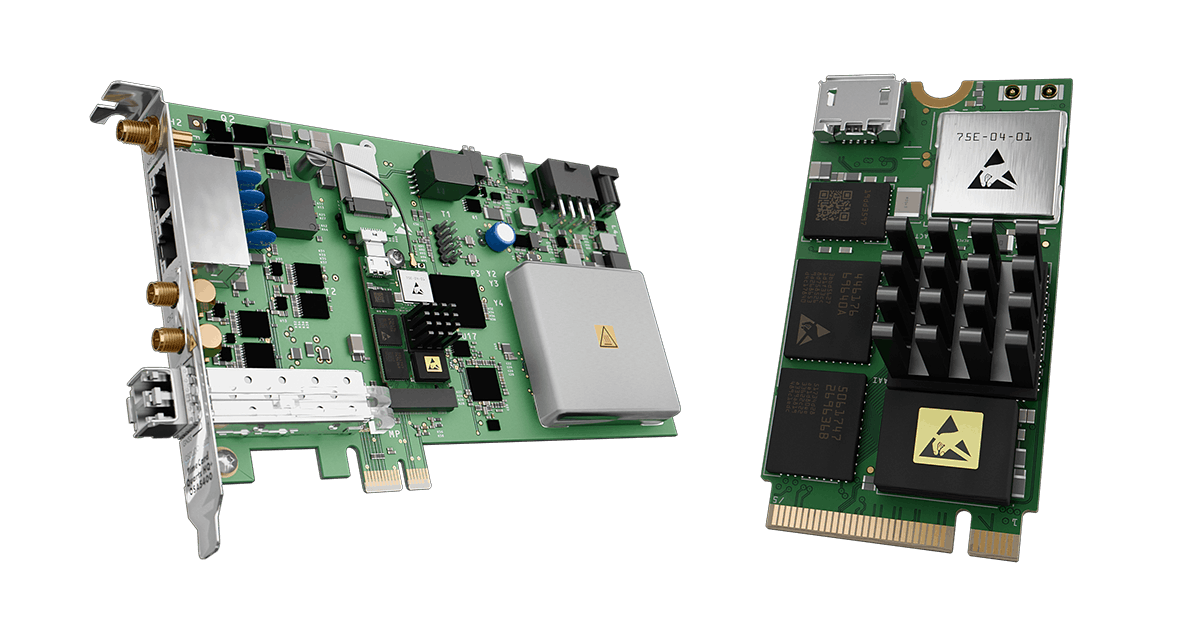
Figure 5: OSA 5400 TimeCard™ (left) and SyncModule™ (right)
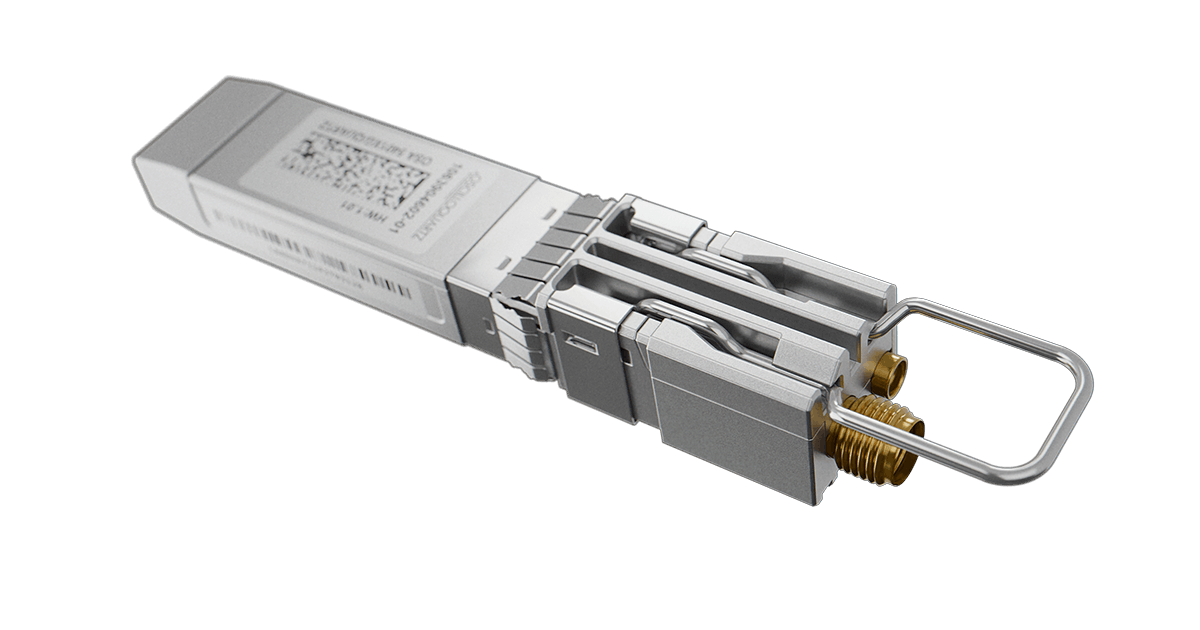
Figure 6: OSA 5401 SyncPlug™
Timing across the defense architecture
One of Oscilloquartz’s key strengths is the breadth of its timing portfolio, enabling defense organizations to build a resilient timing hierarchy across the entire architecture. The coreSync+™ Series cesium atomic clocks can provide long-term stability at the core, with ruggedSync™ Series solutions at the tactical edge, edgeSync+™ Series solutions where legacy defense interfaces and packet timing converge, OSAinside™ Series solutions within compute platforms and compact accessSync™ Series solutions deeper into distributed unmanned edge systems.
Together, these technologies can support UAVs, UUVs, unmanned surface vessels, ground robots, autonomous vehicles, expeditionary networks, submarine systems and the command infrastructure that controls them.
Conclusion
Modern unmanned systems are becoming more autonomous, more distributed and more exposed to electronic attack.
Across both manned and unmanned platforms, the operational question is whether a platform can continue to trust its time, position and mission data when operating in a contested environment.
Resilient timing architectures enable manned and unmanned defense platforms to navigate, communicate, synchronize and operate through GNSS disruption and other threats to trusted PNT.