Bistatic and multistatic radar: Synchronizing distributed sensing
Distributed radar systems rely on precise time and frequency references to coordinate sensors across multiple locations. Stable clocks, low phase noise and precision time transfer can improve sensing performance while supporting operation when GNSS is unavailable.
Paul Zweers
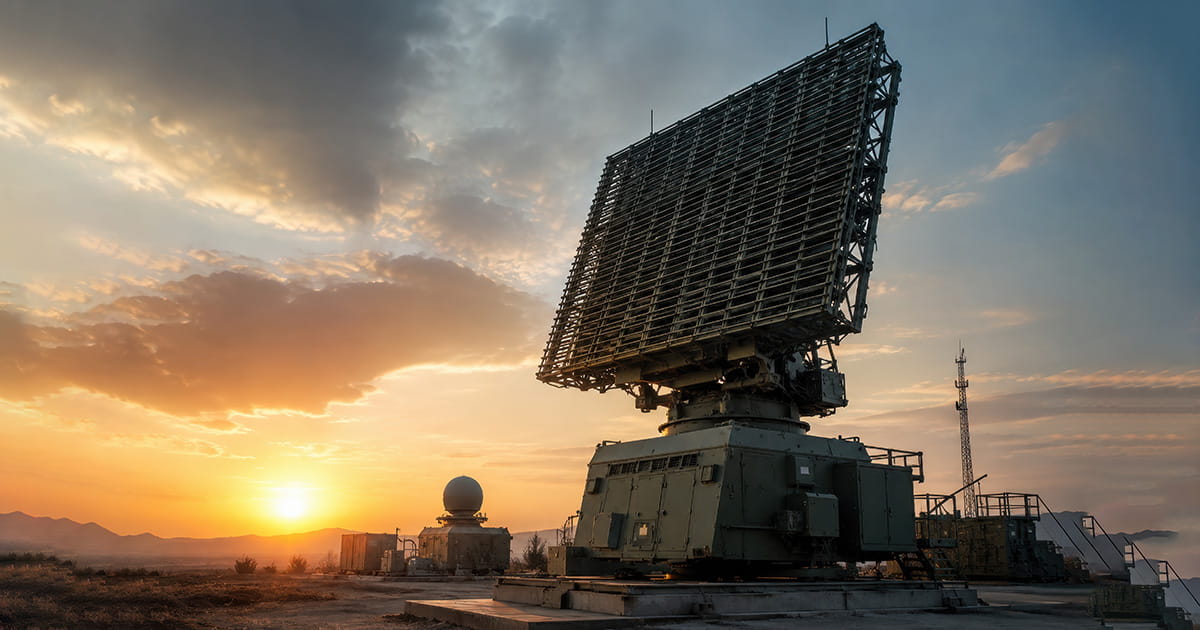
Bistatic and multistatic radar systems extend sensing beyond a single location by distributing transmitting and receiving functions across multiple sites. One site may transmit while several others receive, or multiple radar sites may work together, observing the same target from different directions.
By combining observations from geographically separated sensors, these systems can improve target visibility and support applications such as passive radar, counter-UAS, distributed air defense, MIMO radar, synthetic aperture radar (SAR) and advanced surveillance.
But distributing radar across multiple locations introduces a fundamental challenge: every part of the radar system needs to agree on precisely when something happened and, for the most advanced applications, operate from a highly stable common frequency reference.
One target. Multiple sensors. One common clock.
Imagine three radar receivers located several kilometers apart, all observing the same aircraft. Ideally, each receiver associates its measurement with exactly the same instant in time. The radar processing system can then combine those observations to determine where the aircraft is and how it is moving.
If the clock at one radar site is slightly different, that site can effectively report its observation from a slightly different point in time. For a moving target, this may also mean a different apparent position. A timing difference of only one nanosecond represents approximately 30 centimeters of electromagnetic propagation distance.
Timing and synchronization errors can therefore contribute to inaccurate measurements, Doppler errors, reduced coherent processing gain, increased clutter and difficulties associating observations from multiple sensors with the same target.
If several radar sensors are expected to behave like one radar system, they need to share the same precise sense of time and frequency.
Why a better clock can help a radar see better
Radar is fundamentally about detecting very small changes in electromagnetic signals. Doppler radar, for example, determines whether a target is moving by measuring changes in the frequency and phase of a reflected signal.
But the radar’s own electronics also depend on oscillators and frequency references. If those references introduce instability or excessive phase noise, the radar adds uncertainty of its own to the signal it is trying to measure.
This becomes especially important when a target is difficult to distinguish from its surroundings – for example, a small drone moving slowly against strong reflections from terrain, buildings or vegetation. Depending on the overall system, a highly stable, low-phase-noise frequency reference can support more accurate Doppler estimation and improved clutter suppression.
Optical cesium meets coherent radar
The coreSync™ Series OSA 3300 uses optical cesium technology to provide an exceptionally stable long-term frequency reference. For distributed radar, this can provide a highly stable master reference rather than relying exclusively on less stable local oscillators.
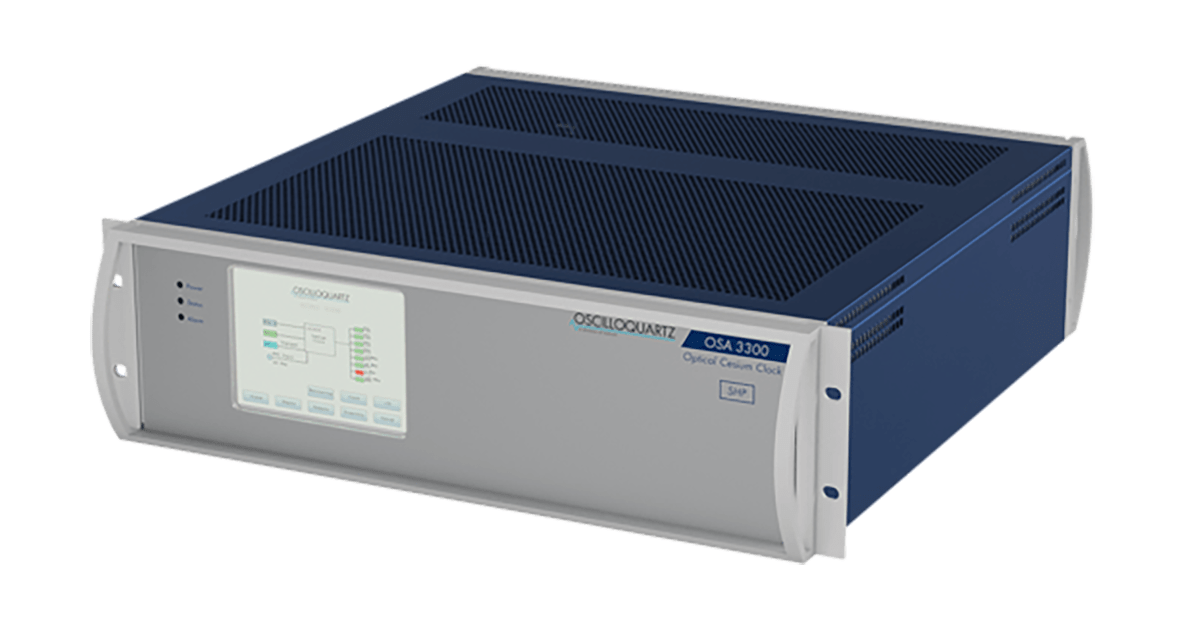
Figure 1: coreSync™ Series OSA 3300 optical pumping cesium clock
Adding the Enhanced Short-Term Unit (ESTU) addresses another part of the radar challenge. ESTU significantly improves short-term frequency stability and close-in phase-noise performance – characteristics that are particularly relevant during coherent radar processing.
With ESTU-15, the OSA 3300 SHP delivers approximately 20× better one-second frequency stability compared with the standard SHP reference.
Together, optical cesium and ESTU provide long-term frequency stability alongside the low phase noise and short-term stability needed during coherent radar measurements and processing.
Synchronizing radar across distance
An exceptional master clock at one location does not automatically synchronize every other radar site. The precision reference must also be distributed across the network.
For demanding distributed radar architectures, White Rabbit can provide precision time and frequency transfer over a fiber/Ethernet network. This allows a common master reference to be extended to geographically separated radar sites rather than treating each site as an independent timing island.
The architecture is straightforward: OSA 3300 + ESTU provides the ultra-stable timing and frequency foundation, an Oscilloquartz White Rabbit-capable grandmaster distributes that precision across the network, and the distributed radar nodes use the common reference to operate together.
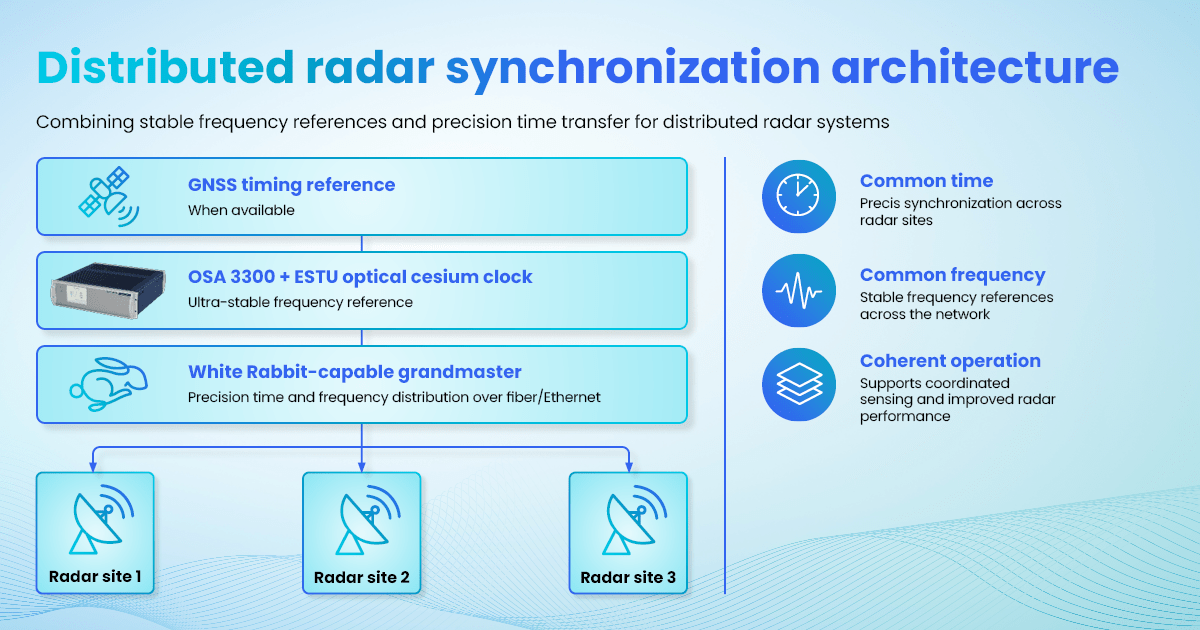
Figure 2: Distributed radar synchronization architecture combining an OSA 3300 optical cesium frequency reference with White Rabbit precision time and frequency transfer to support synchronized radar sites
When GNSS is no longer available
Modern systems use GNSS as an accurate and convenient source of time. A defense radar system, however, cannot necessarily assume that GNSS will always be available.
In a contested electromagnetic environment, GNSS signals may be jammed, spoofed, obstructed, or otherwise unavailable.
This makes holdover – the ability to maintain a stable reference after losing the external timing source – an important element of resilient PNT. Optical cesium provides exceptional long-term stability, while ESTU complements it with the short-term stability and low phase noise needed by demanding coherent applications.
From better timing to better sensing
The evolution from conventional radar toward bistatic, multistatic and distributed radar turns multiple geographically separated sensors into a coordinated sensing system. The more closely those sensors must operate together, the more important their common understanding of time, frequency and phase becomes.
By combining the long-term stability of the OSA 3300 optical cesium clock, the short-term performance of ESTU, and precision time distribution technologies such as White Rabbit, radar operators can establish a stable synchronization foundation across geographically separated sites. This supports coordinated sensing and helps maintain reliable timing and frequency references when GNSS is disrupted.